
University of Toronto Admissions 2026: Complete Guide for International Students
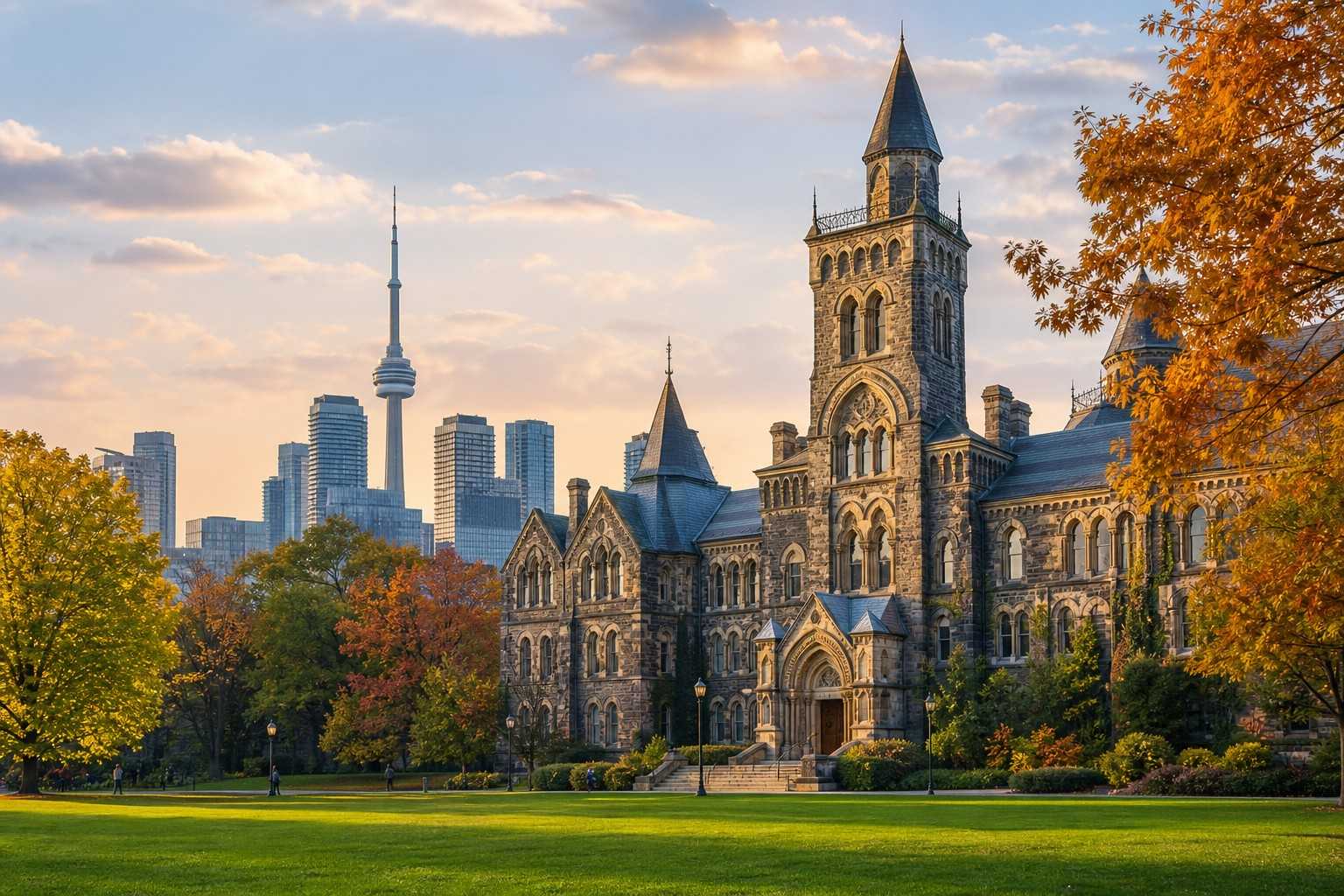
Quick summary: The University of Toronto (U of T) is Canada's largest research university and a top global choice for international students. This 2026 guide covers admissions pathways, program campuses, official tuition ranges, English requirements, key deadlines, and how U of T compares with other Canadian universities—using information from U of T's Future Students site and published fee schedules.
University of Toronto admissions draw tens of thousands of international applicants each year for programs in engineering, business, life sciences, computer science, and liberal arts. U of T operates three undergraduate campuses—St. George (downtown Toronto), Mississauga (UTM), and Scarborough (UTSC)—each with distinct program strengths. Admission is competitive and based on your full academic record, prerequisite courses, and any supplemental materials your program requires.
This guide is for students completing high school outside Canada (or in Canada without a domestic applicant profile) who want a clear, fact-based overview before applying through OUAC or the U of T International Application.
University of Toronto overview (2026)
The University of Toronto is a public research university founded in 1827. It consistently ranks among the world's top universities and is known for research output, co-op and professional pathways (including Rotman Commerce and engineering streams), and access to Canada's largest city for internships and industry networks.
| Overview factor | University of Toronto (U of T) |
|---|---|
| Location | Toronto, Ontario, Canada (St. George, Mississauga, Scarborough campuses) |
| Institution type | Public research university |
| Undergraduate scale | One of Canada's largest university communities; students from 160+ countries (per U of T) |
| Application routes | OUAC (105 or 101 as applicable) or U of T International Application for eligible overseas-only applicants |
| Selection basis | Competitive; full academic record + program prerequisites + supplements where required |
| Top scholarships (international) | Lester B. Pearson International Scholarship (~37 students/year; tuition, books, incidental fees, residence for four years) |
| Official planning resources | Future Students — International, Dates & Deadlines, Fees |
University of Toronto admissions requirements for international students
There is no single GPA cutoff published for all programs. U of T evaluates your entire academic history in the curriculum you are completing (CBSE, IB, A-Levels, US diploma, etc.), including prerequisite senior-level courses for your intended program.
Common admission requirements (all applicants)
- Senior English: Grade 12 / Year 13 English (or equivalent) required for admission consideration
- Program prerequisites: Mathematics (often Calculus), sciences, or other subjects depending on faculty—verify on the admission requirements page for your curriculum
- Competitive averages: Published ranges vary by program; engineering, computer science, and Rotman Commerce are typically among the most selective
- Supplemental applications: Required for some programs (e.g., Rotman Commerce, Architecture, Engineering extras—check your program page)
- English proficiency: Required if your language of instruction is not English; scores must meet faculty minimums (confirm on Join U of T / program requirements)
English language tests (planning note)
U of T accepts recognized tests such as IELTS Academic, TOEFL iBT, and other options listed on the official site. Minimum scores differ by division and program. Some applicants may qualify for the International Foundation Program (IFP) if they meet academic prerequisites but fall slightly below direct English thresholds—IFP is for international students graduating from high school who have not attended post-secondary study elsewhere.
Always confirm current minimums on future.utoronto.ca before you pay test fees.
How to apply: OUAC and U of T portals (2026)
International students usually follow a two-step process:
- Submit an application through the Ontario Universities' Application Centre (OUAC) (typical for students applying to multiple Ontario universities), or the U of T International Application if you are outside Canada, not studying in Canada, and applying only to U of T (per U of T's international brochure)
- Complete U of T steps in the Join U of T applicant portal: upload transcripts, meet document deadlines, complete supplemental forms, and track decisions
| Applicant situation | Typical application path |
|---|---|
| Applying to several Ontario universities | OUAC (international / out-of-province codes as applicable) |
| Outside Canada; U of T only | U of T International Application (see Applying to U of T) |
| After you apply | Join U of T portal for documents and supplements |
University of Toronto admissions deadlines (2026 entry)
Deadlines depend on program and whether you seek early consideration. U of T encourages strong applicants to apply by November 7 and complete portal steps by December 2 for the first admission round (2026 admissions cycle, per official deadlines page).
| Milestone | Typical 2026 admissions timing | What to do |
|---|---|---|
| Early consideration (recommended) | Apply by Nov 7; portal steps by Dec 2 | Submit OUAC / international app and upload documents early |
| Document deadlines (examples) | Jan 15 – Jun 19 (varies by faculty) | Engineering & Music often Jan 15; Arts & Science Feb 2; UTSC extended to Jun 19 (2026 table) |
| Equal consideration | Confirm OUAC last date for equal consideration on OUAC site | Late applications may be reviewed if space remains |
| Offers & deposits | Spring / summer after review | Pay admission deposit via ACORN if required in offer letter |
| Study permit | After acceptance | Use letter of acceptance for Canadian study permit application |
Verify every date on U of T Dates & Deadlines and your OUAC account—faculties update extensions.
University of Toronto tuition fees for international students (2025–2026)
International students pay higher tuition than domestic students. Fees include incidental fees and, for international students, the University Health Insurance Plan (UHIP). Books, housing, meals, and personal expenses are additional.
| Program area (international) | Indicative tuition + incidental fees (CAD) | Notes |
|---|---|---|
| Arts, Science, Commerce & Management (St. George, UTM, UTSC) | ~$66,356 – $67,173 per year | Range reflects program/campus variation (2025–2026 schedule) |
| Applied Science & Engineering | ~$73,056 per year | Among the highest undergraduate international fee bands |
| Architecture, Landscape & Design | ~$66,350 per year | Supplemental portfolio/application required |
| Kinesiology & Physical Education | ~$51,795 per year | Verify campus-specific program code on OUAC |
| Music | ~$51,438 per year | Audition / portfolio requirements apply |
Source: University of Toronto international undergraduate fee schedule (2025–2026), published on future.utoronto.ca/fees. 2026–2027 amounts are usually released in summer—recheck before budgeting.
Total cost of attendance (budgeting)
Plan beyond tuition:
- Residence or off-campus rent in the Greater Toronto Area (typically a major cost line)
- Meal plan or groceries
- Books and supplies
- UHIP, transit, and personal expenses
Many international families compare U of T with McGill and UBC on total cost and program fit—not ranking alone.
Three U of T campuses: which to choose?
| Campus | Best known for | Student experience |
|---|---|---|
| St. George (Toronto) | Rotman Commerce, engineering, arts & science breadth, professional networking | Urban campus integrated with downtown Toronto |
| University of Toronto Mississauga (UTM) | Commerce, CCIT, sciences, growing research profile | Suburban campus; shuttle/links to Toronto |
| University of Toronto Scarborough (UTSC) | Co-op-intensive programs, management, sciences | Strong co-op culture; eastern GTA location |
Your OUAC program code determines campus and degree path—research each program on U of T's Program Finder before you submit.
Lester B. Pearson International Scholarship
If cost is a major concern, the Pearson Scholarship is U of T's flagship award for international students. It covers tuition, books, incidental fees, and residence for four years for approximately 37 students selected worldwide each year. Candidates need exceptional academics, creativity, and leadership. Nomination processes involve your school; see Pearson Scholarships for the current cycle.
University of Toronto admissions: tips for a stronger application
- Match prerequisites exactly to your OUAC program choice—wrong course combinations are a common reason strong students miss offers
- Apply early when possible (November / December window) for competitive programs
- Complete supplements immediately for Commerce, Engineering, Architecture, or portfolio-based programs
- Show rigour in your transcript (IB HL, AP, A-Levels, or top board marks in relevant subjects)
- Use the optional profile on OUAC / U of T portals to explain context (school profile, course limits, disruptions)
- Plan English tests so scores arrive before document deadlines
After admission: study permit and enrollment
International students generally need a Canadian study permit for programs longer than six months. After you accept an offer, U of T issues documentation for your permit application. Pay any required admission deposit through ACORN if stated in your offer. Refunds are limited—typically only in exceptional cases such as study permit refusal (per U of T fee guidance).
Frequently asked questions: University of Toronto admissions
Is University of Toronto admissions difficult for international students?
Yes for popular programs. U of T does not publish one global acceptance rate for all international applicants, but engineering, computer science, and commerce receive far more qualified applicants than spaces. Strong grades in required courses are necessary but not sufficient—supplements and timing matter.
Do international students apply through OUAC?
Most students applying to multiple Ontario universities use OUAC. If you live outside Canada, are not studying in Canada, and apply only to U of T, you may use the U of T International Application instead. Either way, you must complete U of T's Join portal steps.
What GPA do international students need for University of Toronto?
U of T reviews your curriculum holistically. Indian CBSE/ISC, IB, A-Level, and US GPA scales are evaluated differently per program. Check the published admission range for your specific program on the Future Students site rather than relying on unofficial cutoffs.
How much does University of Toronto cost for international students?
For 2025–2026, many arts/science/commerce international students pay roughly $66,000–$67,000 CAD in tuition and incidental fees per year, while engineering is higher (about $73,000 CAD). Add housing, meals, and personal costs for a realistic total.
Can I get a full scholarship as an international student at U of T?
Full funding is rare but possible through the Lester B. Pearson International Scholarship and select faculty awards. Most international students combine partial scholarships, family support, and education loans. Search faculty-specific awards after you receive an offer.
Is the University of Toronto better than McGill or UBC?
Better depends on program, budget, language, and career goals. U of T offers strong Toronto industry access; McGill excels in Montreal's research culture; UBC offers milder climate and Pacific networks. Compare program-by-program, not brand alone.
Does U of T require SAT or ACT for international students?
For U.S. pattern curricula, U of T has been test optional for recent cycles—SAT/ACT are considered if submitted but are not always required. Confirm the current policy for your entry year on the official requirements page.
Final overview: should you apply to the University of Toronto?
Choose U of T if you want a globally recognized degree, access to Toronto's job market, and depth in your specific faculty. Skip applying without checking prerequisites, document deadlines, and total cost—including residence in the GTA.
Next steps: Shortlist your OUAC program codes, mark deadlines on a calendar, book English tests if needed, and compare financial aid with other Canadian universities before you pay application fees.
Disclaimer: Admissions policies, fees, and deadlines change. This article summarizes publicly available U of T materials for planning only; it is not official advice from the university. Verify all details on future.utoronto.ca before you apply.
Was this guide helpful?