
The Lawrenceville School: Complete Guide to New Jersey's Elite Boarding School
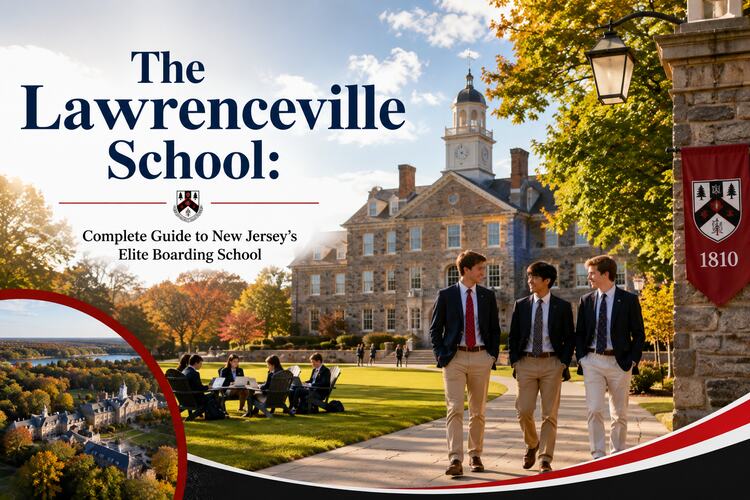
Are you searching for a top-tier boarding school that combines academic excellence with character development? The Lawrenceville School in New Jersey stands as one of America's most prestigious preparatory institutions, and for good reason. Founded in 1810, this elite coeducational boarding and day school has educated generations of leaders who go on to attend Ivy League universities.
If you're considering The Lawrenceville School for your child or yourself, you're probably wondering about admissions, tuition costs, academic quality, and campus life. This comprehensive guide covers everything you need to know—from the distinctive Harkness teaching method to the famous House system, from application deadlines to financial aid options.
By the end of this article, you'll have a clear understanding of whether The Lawrenceville School is the right fit for your educational journey. Let's explore what makes this institution truly exceptional.
What Is The Lawrenceville School?
History and Legacy
The Lawrenceville School is a private, coeducational college-preparatory boarding and day school located in Lawrenceville, New Jersey. Established in 1810 as the Maidenhead Academy, it's one of the oldest preparatory schools in the United States. The school was renamed in 1883 after John Cleve Green, a former student whose fortune enabled its transformation into an elite institution.
Key historical milestones include:
-
1810: Founded as Maidenhead Academy by Presbyterian clergyman Isaac Van Arsdale Brown
-
1883: Purchased by John Cleve Green Foundation and renamed The Lawrenceville School
-
1884-85: Campus designed by Frederick Law Olmsted and Peabody & Stearns (now a National Historic Landmark)
-
1936: Adopted the Harkness system of seminar-based learning
-
1964: Admitted first African-American students
-
1987: Became coeducational, admitting girls for the first time
Location and Campus
The school occupies a stunning 700-acre campus in Mercer County, New Jersey, just 15 minutes from Princeton University. The historic core (17.74 acres) was designated a National Historic Landmark District in 1986.
Campus facilities include:
-
38 major buildings, including Bunn Library (100,000 volumes)
-
18 athletics fields and a nine-hole golf course
-
12 outdoor tennis courts and indoor tracks
-
Hockey arena and ropes course
-
Tsai Commons and Field House (opened 2024-25)
-
Big Red Farm (working agricultural facility with greenhouses, sheep, chickens, pigs)
-
6.1-megawatt solar farm (provides energy needs since 2012)
Mission and Values
Through House and Harkness, Lawrenceville challenges a diverse community of promising young people to lead lives of learning, integrity, and high purpose. The school's mission is "to inspire the best in each to seek the best for all".
Motto: Virtus Semper Viridis ("Virtue Always Green")
Academic Programs & The Harkness Method
The Harkness Teaching Method
The Lawrenceville School is renowned for its commitment to the Harkness method of teaching and learning. This innovative approach places students and teachers around an oval table, fostering:
-
Open discussion rather than lecture-based learning
-
Student-centered inquiry and curiosity
-
Collaborative problem-solving among peers
-
Active participation from every student
The Harkness table represents more than furniture—it's a state of mind that every Lawrentian brings to the classroom: a spirit of openness, curiosity, and discovery.
Academic Structure
The school serves grades 9-12 (II Form through V Form) with an enrollment of 802 students (2023-24) and 107.8 full-time equivalent teachers, creating an exceptional student-teacher ratio of 7.4:1.
Academic Departments include:
-
English
-
History
-
Interdisciplinary Studies
-
Language (world languages)
-
Mathematics
-
Performing Arts
-
Religion and Philosophy
-
Science
Advanced Placement & Course Catalog
The Lawrenceville School offers a diverse array of courses, including Advanced Placement (AP) classes and unique electives that cater to various interests. The course catalog includes specialized programs such as:
-
Term Away/Year Away programs
-
Senior Independent Study (LW599)
-
New Jersey Scholars Program (summer academic program)
-
Island School semester abroad in Cape Eleuthera, The Bahamas
College Preparation
Lawrenceville offers students an education that not only prepares them for college but also teaches them to be active, thoughtful members of society. The school is a member of the prestigious Eight Schools Association and Ten Schools Admission Organization, groups of leading American secondary schools.
Historically, Lawrenceville has been a major feeder school to Princeton University, sending 62 students there in 1932 (nearly 10% of the freshman class). Today, graduates regularly attend Ivy League universities and other top-tier institutions.
Admissions Process & Requirements
Step-by-Step Application Process
Getting into The Lawrenceville School is highly competitive, with an admissions rate of approximately 20.5% (2017-18). The application process involves seven critical steps:
1. Admission Inquiry & Campus Visit
-
Complete an inquiry form (first step for all applicants)
-
Grants access to Lawrenceville's admissions portal
-
Visit the historic 700-acre campus or attend a virtual tour
-
Demonstrates interest and helps understand school culture
2. Application & Financial Aid Forms
-
Fill out personal details via the Gateway to Prep School Application
-
Submit application fee (waivable for financial aid applicants)
-
Separate financial aid application required at lawrenceville.org/admission
3. Student Essays & Short Answers
-
Lawrenceville places a strong emphasis on student essays
-
Essays reveal character, passion, and writing ability
-
Unlike some schools, essays are crucial for admission decisions
4. Interview
-
All applicants must complete an interview with admissions team
-
Conducted online or in-person
-
Available over summer, September through January
-
Day student interviews: by November 14, 2025
-
Boarding student interviews: by January 15, 2026
-
Crucial opportunity to express enthusiasm and demonstrate character
5. Standardized Testing
For the 2025-26 admissions cycle, Lawrenceville requires:
|
Grade Level |
Required Tests |
|
9th Grade |
SSAT or ISEE (taken after June 10) |
|
11th Grade |
SSAT, ISEE, PSAT, SAT, or ACT (after June 12) |
|
12th Grade/PG |
PSAT, SAT, or ACT (after June) |
|
Non-native English speakers |
TOEFL or IELTS plus grade-specific tests |
Strong test scores are important but not the only factor—Lawrenceville takes a holistic approach.
6. Recommendations
Three letters required:
-
One from current English teacher
-
One from current Math teacher
-
One from school administrator or counselor
7. Academic Transcripts & School Reports
-
Submit full grade reports including current marking period
-
Past 2 years of grades required
-
International applicants must translate reports to English
-
Example: For 9th grade, send 6th, 7th, and completed 8th grade marks
Application Deadlines
|
Milestone |
Date |
|
Application Deadline |
January 15 |
|
Admission Decisions Released |
March 10 |
|
Applications After Deadline |
Rolling basis (space permitting) |
Tuition, Fees & Financial Aid
Tuition Costs (2026-27)
The Lawrenceville School is one of America's most expensive private high schools, but it's committed to making education accessible through generous financial aid:
|
Student Type |
Annual Tuition (2026-27) |
|
Boarding Students |
$82,710 USD |
|
Day Students |
$68,060 USD |
|
School Fees |
$1,750 USD |
In currency equivalents:
-
GBP: ~£65,500 (boarding) / £53,800 (day)
-
AUD: ~$127,000 (boarding) / $104,500 (day)
-
CAD: ~$113,000 (boarding) / $93,000 (day)
Financial Aid Program
Despite high tuition, The Lawrenceville School commits to providing need-based financial aid covering 100% of demonstrated financial need.
2023-24 Financial Aid Statistics:
-
34% of student body received financial aid
-
Average boarding aid grant: Over $60,000
-
Average day grant: Over $44,000
-
189 families with boarding students on scholarship (2024-25)
Income-Based Contributions:
|
Household Income |
Average Family Contribution |
|
Under $125,000/year |
$703 (64 families) |
|
Over $350,000/year |
$36,000 (36 families) |
This demonstrates the school's commitment to meritocracy rather than aristocracy.
Endowment
The school's endowment grew from $381.1 million (2016) to $632.9 million (2021), enabling substantial financial aid support. In 2017, Alibaba founder Joseph C. Tsai '82 and wife Clara Wu '82 made the largest gift in school history (larger than $60 million donation from 2007).
Campus Life & House System
The House System
The Lawrenceville School utilises a distinctive House system, similar to many British schools, creating a tight-knit community within the larger school.
House Groups by Grade:
|
Grade (Form) |
Houses |
Description |
|
II Form (9th/Freshmen) |
Raymond (boys), Dawes (girls) |
Two Lower Houses, live together |
|
III Form (10th/Sophomores) |
5 Crescent Houses (girls) |
Live for 2 years |
|
IV Form (11th/Juniors) |
6 Circle Houses (boys) |
Live for 2 years |
|
V Form (12th/Seniors) |
Reynolds, McPherson (girls); Upper House, Haskell (boys) |
Senior Houses |
Circle Houses (designed by Peabody & Stearns, part of National Historic Landmark):
-
Cleve, Griswold, Woodhull, Hamill, Kennedy, Dickinson
Crescent Houses (designed 1986-2010):
-
Carter, McClellan, Stephans, Stanley, Kirby
Faculty Involvement:
Faculty members are associated with each House as Heads of House or duty affiliates, supporting and monitoring students.
Residential Life Benefits
The House system provides:
-
Home-like atmosphere better for adolescent development
-
House athletic competition building community
-
Academic competition between Houses
-
Deep sense of belonging and identity
-
"Feeds" on Saturday (late-night food in Houses)
-
Prefect opportunities for seniors in Freshman/House dorms
Most dorm rooms are doubles on campus, fostering close friendships.
Student Life Stats
-
802 students (2023-24)
-
55% non-white student body (2024)
-
Coeducational since 1987
-
Global community with international students
-
34% on financial aid promoting diversity
Athletics & Extracurricular Activities
Athletics Program
The Lawrenceville School competes in the Mid-Atlantic Prep League and offers extensive athletic opportunities:
Sports Offered:
-
Baseball, Basketball, Crew, Cross-country
-
Fencing, Field hockey, Football, Golf
-
Ice hockey, Indoor/outdoor track, Lacrosse
-
Soccer, Softball, Squash, Swimming
-
Tennis, Volleyball, Water polo, Wrestling
Intramural Sports:
-
Ultimate Disc (Crescent Houses)
-
8-man flag football (Circle Houses)
Athletic Achievements
2023-25 Boys' Lacrosse:
-
Won Prep Nationals championship (2023, 2024, 2025)
-
Three consecutive championships (defeated Salisbury 12-4 in 2025)
-
18-game winning streak (2023, 19-1 record)
2015 Boys' Crew:
-
MAPL League Championship
-
US Rowing Mid-Atlantic Youth Championship (1st place)
-
4th at US Rowing Youth Nationals
-
Selected for Henley Royal Regatta
-
Widely regarded as greatest crew in school history
Track & Field:
-
2008: Boys' and girls' varsity teams completed season undefeated
-
2011: 4x200 team fastest in nation (All-American status)
-
2006-2014: Boys' varsity track won 103 dual meets in a row
Hill School Rivalry
The Hill School of Pottstown, Pennsylvania is Lawrenceville's rival. "Hill Weekend" features the nation's eighth-oldest high school football rivalry (dating to 1887) and fifth-oldest private school rivalry.
Student Publications
The Lawrence (weekly newspaper) is the third oldest secondary school newspaper in the United States (published since 1881):
-
Won Columbia Journalism Award consecutive years
-
Won editorial award from Youth Journalism International (2019)
-
Notable contributors: Bob Ryan (sportswriter, 1964), Joseph Tsai (Alibaba founder)
Other Student Publications:
-
The First Amendment (political magazine, 2010)
-
The Ledger (business magazine)
-
LMAG (fashion magazine)
-
In the Margins (Diversity magazine)
-
The Contour (global issues newspaper)
-
The Lit (literary magazine, founded 1895 by Owen Johnson)
-
Olla Podrida (yearbook)
-
Lawrencium (science research journal)
Notable Alumni
Arts & Literature:
-
Owen Johnson (author, Lawrenceville Stories)
-
James Merrill (Pulitzer Prize poet)
-
Frederick Buechner (author)
-
Thornton Wilder faculty (3-time Pulitzer Prize author)
Music:
-
Huey Lewis (musician)
-
Dierks Bentley (country musician)
Business & Media:
-
Joseph C. Tsai '82 (Alibaba founder)
-
Tinsley Mortimer (Real Housewife of New York)
Sports:
-
Joakim Noah (NBA player)
-
Bobby Sanguinetti (hockey player)
Conclusion
The Lawrenceville School stands as one of America's most distinguished preparatory institutions, combining 180+ years of history with innovative educational methods like the Harkness system. With its 7.4:1 student-teacher ratio, 700-acre National Historic Landmark campus, and 100% financial need coverage, Lawrenceville offers an unparalleled boarding school experience.
Key takeaways about The Lawrenceville School:
Academic Excellence: Harkness method fosters critical thinking and collaboration
Affordable Access: 34% on financial aid, average boarding grant over $60,000
Strong Community: House system creates deep belonging and support
College Preparation: Member of Eight Schools Association, Ivy League feeder
Athletic Success: Multiple national championships across sports
Historic Campus: 700 acres designed by Frederick Law Olmsted
Application deadline is January 15 with decisions released March 10. If you're seeking an education that will "inspire the best in each to seek the best for all," The Lawrenceville School could be your ideal fit.
Ready to apply? Start with the inquiry form at lawrenceville.org/admission and schedule your campus visit today.
Call-to-Action: Found this guide helpful? Share it with other families considering boarding school, comment with your questions below, and subscribe for more educationalresources.
FAQs
1. What is The Lawrenceville School known for?
The Lawrenceville School is known for its Harkness method of seminar-based learning, distinctive House system (similar to British schools), and status as one of America's oldest and most prestigious preparatory schools. Founded in 1810, it's a member of the prestigious Eight Schools Association and has educated generations of leaders who attend Ivy League universities.
2. How much does The Lawrenceville School cost in 2026?
For the 2026-27 school year, tuition is $82,710 for boarding students and $68,060 for day students. School fees are $1,750. However, 34% of students receive financial aid, with an average boarding grant over $60,000. The school covers 100% of demonstrated financial need.
3. What are the admission requirements for The Lawrenceville School?
Admission requires: SSAT or ISEE scores, three teacher recommendations (English, Math, administrator), academic transcripts (past 2 years), student essays, and an interview. Non-native English speakers must submit TOEFL or IELTS. The application deadline is January 15, with decisions on March 10.
4. When is The Lawrenceville School application deadline?
The application deadline is January 15 for boarding students. Day student interviews must be completed by November 14, 2025, while boarding student interviews are due by January 15, 2026. Admission decisions are released March 10. Applications after January 15 are considered on a rolling basis.
5. What is the acceptance rate at The Lawrenceville School?
The Lawrenceville School has an admissions rate of approximately 20.5% (2017-18 school year). Applications increased nearly 20% during the pandemic, with part of the increase driven by Black applicants and families seeking financial aid.
6. Does The Lawrenceville School offer financial aid?
Yes, extensively. The Lawrenceville commits to providing need-based financial aid covering 100% of demonstrated financial need. In 2023-24, 34% of students received financial aid, with average boarding aid over $60,000 and average day aid over $44,000. Families earning under $125,000/year paid an average of just $703 after aid.
7. Is The Lawrenceville School coeducational?
Yes, since 1987. Lawrenceville began admitting girls in 1987 and has been fully coeducational ever since. In 1999, the student body elected its first female student body president, and in 2003, Elizabeth Duffy became the School's first female headmaster.
Was this guide helpful?